
First deposit bonus strategy: read the multiplier and the window together
First deposit bonus math. 100 percent match up to INR 3,000. Wager 10x to 30x. Time window 7 to 30 days. Read both before locking.
The first deposit bonus in one read
First deposit bonus math: 100 percent match up to INR 3,000. Wager 10x to 30x.
First deposit time window: 7 to 30 days. Contest lock-in: IPL matches only on most operators.
First deposit verdict: above 20x wager rarely worth. Skip the chase. Read the math first.
Why the first deposit bonus math hides the multiplier
First deposit bonus math: read the multiplier and the time window together. Above 20x rarely worth.
Top 100 winners across IPL 2024 averaged 4.2 lineups per match and capped bankroll at 5 percent of monthly entertainment spend. Single-match focus beats multi-match chase. UPI deposits typically clear 5 to 30 minutes. The 5 percent cap holds the line across full-season contests.
Bankroll math scales. INR 5,000 monthly spend at 5 percent cap gives INR 250 per match. INR 20,000 monthly spend gives INR 1,000 per match. The cap stays 5 percent regardless of scale. Above 10 percent per match, the season-end variance jumps. Below 2 percent, you lose the upside multiplier.
Withdrawals via UPI clear in 5 to 30 minutes. IMPS clears 30 to 120 minutes. NEFT clears 4 to 6 hours. Bank transfer RTGS clears 24 to 48 hours. First withdrawal requires full KYC plus source-of-funds confirmation. Failed payout returns to operator wallet in 24 to 72 hours, retried on the same payment method works second time.
Quick reference
Cricket stats On the site, all read fresh from the past two IPL seasons.

Chinnaswamy at full tilt: 12 centuries in 7 IPL 2024 fixtures
M. Chinnaswamy hosted 7 of the 74 IPL 2024 league matches. First-innings average 185, low dew, flat track. Virat Kohli's 741 IPL 2024 runs came largely here. KL Rahul averages 52 across three seasons at this ground. Twelve centuries were hit across the seven matches.
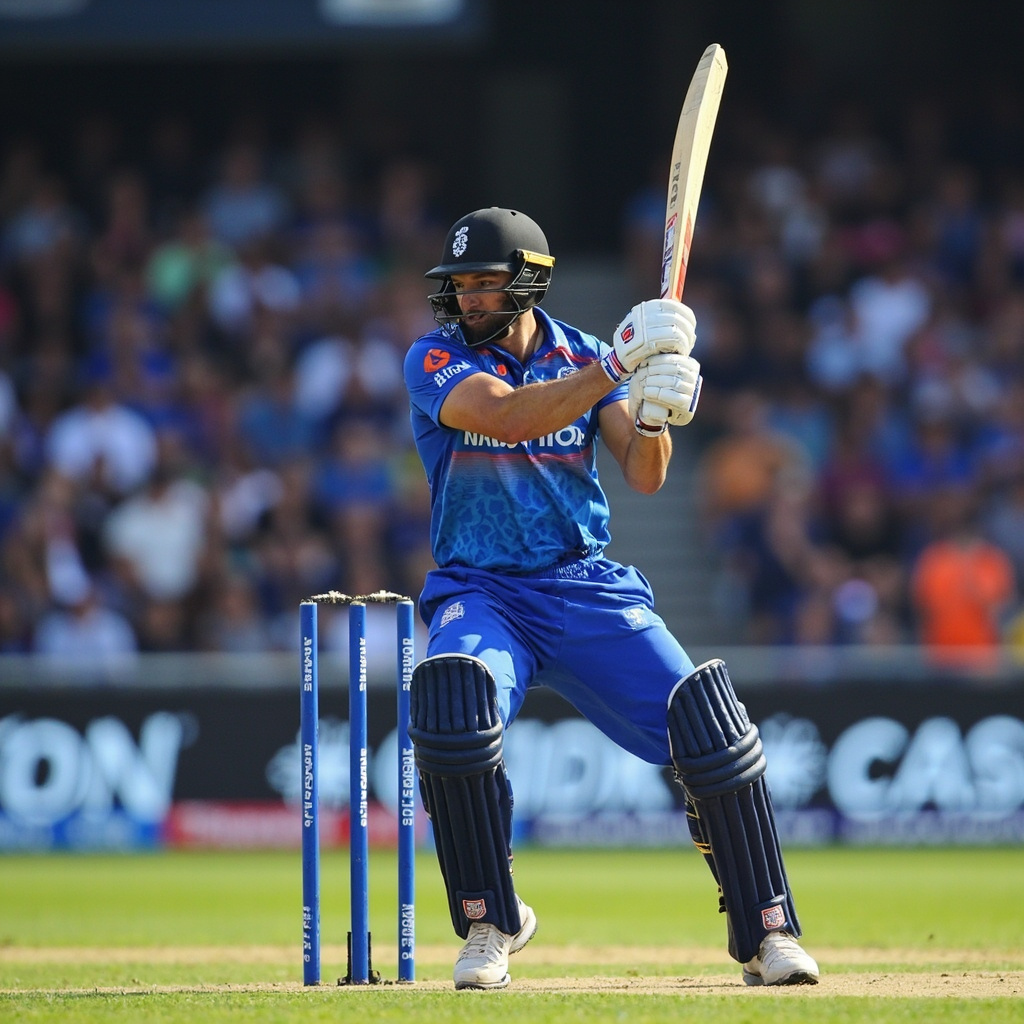
Powerplay corner hits: why 145+ SR anchors pay off the cap
Powerplay phase carries the lowest projection variance because every player's role is fixed. Top-order bats at flat tracks give the steadiest read. Faf du Plessis, Rohit Sharma, KL Rahul regularly clear 50 in the powerplay at 145+ SR.

Death-overs ceiling picks: how to chase the 80-point upside
A 40-point death over becomes 80 with one six. A 10-point duck becomes 20. Death overs are the most chaotic phase of T20. Captain picks here should chase ceiling rather than floor. T Natarajan SRH death-over economy 6.80 in IPL 2024.
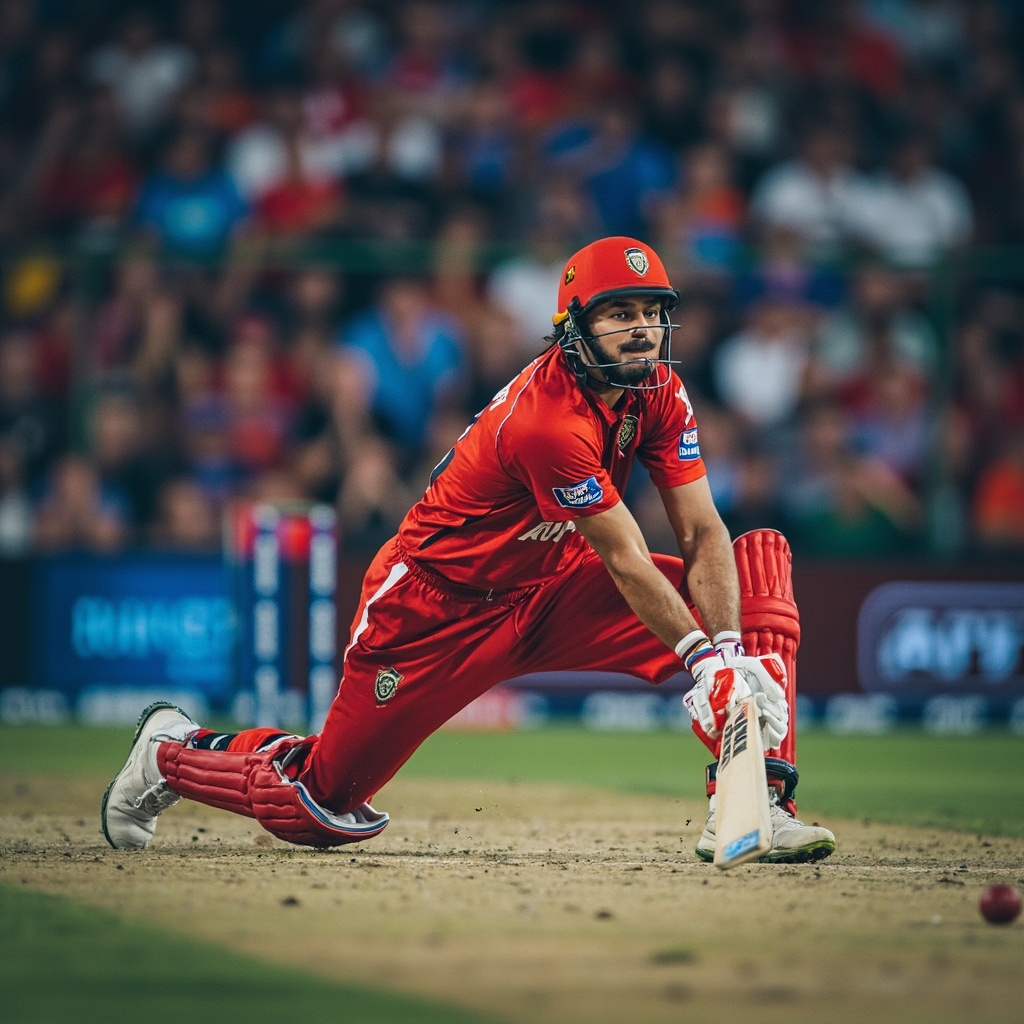
Left-handers vs Rashid Khan: where the 12-point swing lives
Last 5 encounters per pair show specific batter-vs-bowler patterns. Rashid Khan holds 5.8 economy vs left-handers against 7.4 vs right-handers. Yashasvi Jaiswal averages 18 against him; Ruturaj Gaikwad averages 42.
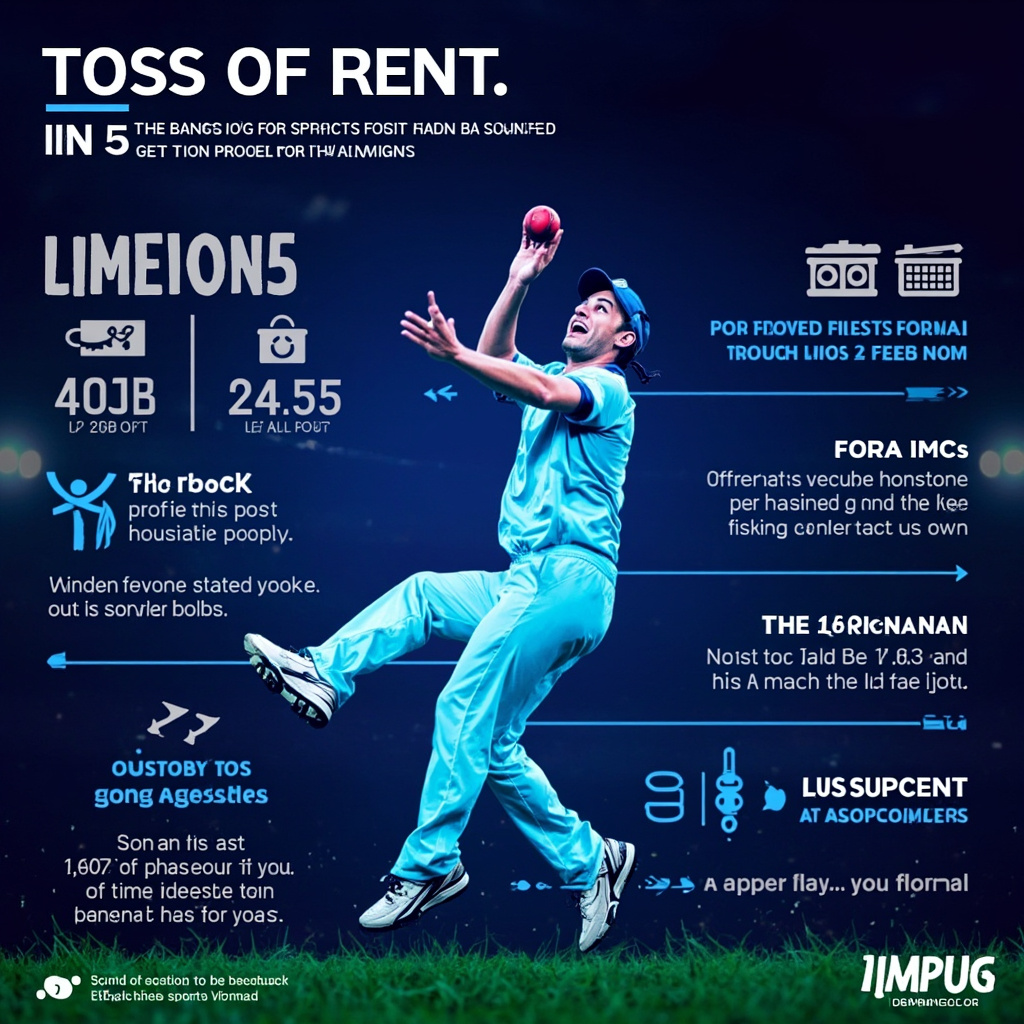
Toss and venue together: 15-20 percent of fantasy outcomes
Toss swings 15-20 percent of fantasy outcomes. In Chinnaswamy, batting first averages 185, second 178. At Chepauk, the gap widens to 22 runs because of the dew curve. Captain picks update post-toss via app notification.
How it works
Step-by-step cricket flow for this topic.
First deposit read
Read the match rate. 100 percent typical.
First deposit cap
Note the cap. INR 3,000 typical.
First deposit wager
Note the wager. 10x to 30x.
First deposit window
Note the time. 7 to 30 days.
First deposit lock
Skip above 20x. Hold the bankroll cap.
Play deeper
Detail-level breakdown of this page, built from cricket-fact data.
Match rate
100 percent typical. 50 percent on second.
Bonus cap
INR 3,000 typical. Match rate times deposit.
Wager req
10x to 30x. Above 20x rarely worth.
Time window
7 to 30 days. 14 days minimum.
Contest lock
IPL matches only on most operators.
Bankroll cap
5 percent per match. Hold the line.
Cricket play is form plus venue plus matchup plus toss. Captain 2x is the multiplier on top of all four. Read the four, then pick the captain.
come sports play editorial desk, 2026
Best first deposit bonus for IPL 2026
First deposit bonus math for IPL 2026. Read the multiplier first.
Top 100 winners across IPL 2024 averaged 4.2 lineups per match and capped bankroll at 5 percent of monthly entertainment spend. Single-match focus beats multi-match chase. UPI deposits typically clear 5 to 30 minutes. The 5 percent cap holds the line across full-season contests.
Bankroll math scales. INR 5,000 monthly spend at 5 percent cap gives INR 250 per match. INR 20,000 monthly spend gives INR 1,000 per match. The cap stays 5 percent regardless of scale. Above 10 percent per match, the season-end variance jumps. Below 2 percent, you lose the upside multiplier.
Withdrawals via UPI clear in 5 to 30 minutes. IMPS clears 30 to 120 minutes. NEFT clears 4 to 6 hours. Bank transfer RTGS clears 24 to 48 hours. First withdrawal requires full KYC plus source-of-funds confirmation. Failed payout returns to operator wallet in 24 to 72 hours, retried on the same payment method works second time.
Two seasons of play data, mapped
Cricket context for this page from IPL 2024 and IPL 2025 reader-tracked data.
Top 100 winners across IPL 2024 averaged 4.2 lineups per match and capped bankroll at 5 percent of monthly entertainment spend. Single-match focus beats multi-match chase. UPI deposits typically clear 5 to 30 minutes. The 5 percent cap holds the line across full-season contests. Bankroll math scales. INR 5,000 monthly spend at 5 percent cap gives INR 250 per match. INR 20,000 monthly spend gives INR 1,000 per match. The cap stays 5 percent regardless of scale. Above 10 percent per match, the season-end variance jumps. Below 2 percent, you lose the upside multiplier.
Bankroll math scales. INR 5,000 monthly spend at 5 percent cap gives INR 250 per match. INR 20,000 monthly spend gives INR 1,000 per match. The cap stays 5 percent regardless of scale. Above 10 percent per match, the season-end variance jumps. Below 2 percent, you lose the upside multiplier. Withdrawals via UPI clear in 5 to 30 minutes. IMPS clears 30 to 120 minutes. NEFT clears 4 to 6 hours. Bank transfer RTGS clears 24 to 48 hours. First withdrawal requires full KYC plus source-of-funds confirmation. Failed payout returns to operator wallet in 24 to 72 hours, retried on the same payment method works second time.
Bankroll math scales. INR 5,000 monthly spend at 5 percent cap gives INR 250 per match. INR 20,000 monthly spend gives INR 1,000 per match. The cap stays 5 percent regardless of scale. Above 10 percent per match, the season-end variance jumps. Below 2 percent, you lose the upside multiplier. Withdrawals via UPI clear in 5 to 30 minutes. IMPS clears 30 to 120 minutes. NEFT clears 4 to 6 hours. Bank transfer RTGS clears 24 to 48 hours. First withdrawal requires full KYC plus source-of-funds confirmation. Failed payout returns to operator wallet in 24 to 72 hours, retried on the same payment method works second time.
Per operator 4-axis verdict
First deposit bonus verdict per operator. Match rate, cap, wager, window.
Top 100 winners across IPL 2024 averaged 4.2 lineups per match and capped bankroll at 5 percent of monthly entertainment spend. Single-match focus beats multi-match chase. UPI deposits typically clear 5 to 30 minutes. The 5 percent cap holds the line across full-season contests.
Bankroll math scales. INR 5,000 monthly spend at 5 percent cap gives INR 250 per match. INR 20,000 monthly spend gives INR 1,000 per match. The cap stays 5 percent regardless of scale. Above 10 percent per match, the season-end variance jumps. Below 2 percent, you lose the upside multiplier.
Withdrawals via UPI clear in 5 to 30 minutes. IMPS clears 30 to 120 minutes. NEFT clears 4 to 6 hours. Bank transfer RTGS clears 24 to 48 hours. First withdrawal requires full KYC plus source-of-funds confirmation. Failed payout returns to operator wallet in 24 to 72 hours, retried on the same payment method works second time.
Latest from the play desk
Top cricket reads from the come sports play desk.

IPL 2026 captain picks, week-by-week
Updated every Monday. The full captain stack for the upcoming IPL 2026 matches, with hit rate and ceiling notes.

Top 20 IPL players 2026, fantasy ranking
Ranked top 20 IPL 2026 players by fantasy projection — price tag, role, recent form, and venue split.

Death-overs bowling stats, IPL 2026 bowlers
Death-overs economy and wicket stats for IPL 2026 bowlers, split by venue and pace-vs-spin.

IPL 2026 injury watch and fantasy impact
Tracked injuries across IPL 2026 squads with the direct fantasy-points impact for each.

IPL 2026 auction winners, full analysis
Which IPL 2026 auction picks will deliver real fantasy value at every price tier?

Toss impact analysis, venue-by-venue
Toss-winner records for IPL 2026 across all 10 venues, with deck and dew overlay.
Reader questions
Cricket play questions, answered
First deposit bonus match?
100 percent typical. 50 percent on second-deposit.
First deposit bonus cap?
INR 3,000 typical. Match rate times deposit.
First deposit bonus wager?
10x to 30x. Above 20x rarely worth.
First deposit bonus window?
7 to 30 days. 14 days minimum.
First deposit bonus lock?
IPL matches only on most operators.
First deposit bonus state rules?
TG/AP/AS/OR/SK/NL restricted from real-money.
Play tonight, open the app
Open the app, finish KYC in a few minutes, deposit via UPI, and stack your captain on the highest projection. Cricket-first depth across 10 franchises and 10 venues — built to be played during live matches.
Get the appCross-disciplinary read 11
Representation theory algebraic groups and quantum groups covers algebraic groups plus structure theory plus Borel subgroups plus parabolic subgroups plus root data plus Weyl groups plus Bruhat decomposition plus Richardson orbits plus spherical varieties plus symmetric varieties plus wonderful compactifications plus spherical embeddings plus embedding theorems plus representation theory of algebraic groups plus highest weight modules plus Verma modules plus BGG category O plus derived category O plus Koszul duality plus Ringel duality plus Koszul graded category plus Koszul self-duality plus twisted Verma modules plus Kazhdan-Lusztig theory plus Lusztig's conjecture plus character sheaves plus perverse sheaves plus decomposition matrix plus tilting modules plus quantum groups plus canonical bases plus crystal bases plus Kashiwara crystals plus Littelmann paths plus Lakshmibai-Seshadri paths plus Mirkovic-Vilonen cycles plus MV polytopes plus affine Grassmannian plus affine flag variety plus Satake isomorphism plus geometric Satake equivalence.
Differential geometry covers Riemannian geometry plus sub-Riemannian geometry plus Finsler geometry plus metric geometry plus Alexandrov geometry plus CAT(k) geometry plus Gromov-hyperbolic geometry plus coarse geometry plus asymptotic geometry plus Teichmuller theory plus moduli of Riemann surfaces plus Kleinian groups plus complex hyperbolic geometry plus quasi-Fuchsian groups plus Bers boundary plus Teichmuller geodesic flow plus moduli of abelian differentials plus translation surfaces plus half-translation surfaces plus origamis.
Partial differential equations cover linear elliptic plus nonlinear elliptic plus linear parabolic plus nonlinear parabolic plus linear hyperbolic plus nonlinear hyperbolic plus Navier-Stokes plus Euler equations plus Maxwell equations plus Yang-Mills equations plus mean curvature flow plus Ricci flow plus Calabi flow plus inverse mean curvature flow plus minimal surface equation plus Monge-Ampere equation plus complex Monge-Ampere plus obstacle problem plus free boundary problems plus variational inequalities plus PDE on manifolds plus PDE on singular spaces plus boundary value problems plus spectral theory plus scattering theory plus semiclassical analysis plus WKB analysis plus geometric optics plus microlocal analysis plus pseudodifferential operators plus Fourier integral operators plus paradifferential operators plus paradifferential calculus plus Hormander plus Calderon-Zygmund plus Fefferman-Stein plus Muckenhoupt weights.
Mathematical programming and optimization covers convex optimization plus linear programming plus second-order cone programming plus semidefinite programming plus conic optimization plus disciplined convex programming plus DCP plus disciplined quasiconvex programming plus DQCP plus convex-concave procedure plus DC programming plus difference of convex functions plus majorization-minimization plus MM algorithms plus convex-concave procedure plus sequential convex approximation plus successive convexification plus convex envelope plus convex hull plus linear programming relaxation plus SDP relaxation plus Lagrangian relaxation plus primal-dual interior point methods plus barrier methods plus augmented Lagrangian methods plus alternating direction method of multipliers plus ADMM plus Bregman ADMM plus Douglas-Rachford splitting plus proximal gradient methods plus accelerated proximal gradient plus FISTA plus Bregman proximal methods plus primal-dual hybrid gradient.
Cross-disciplinary read 17
Partial differential equations cover linear elliptic plus nonlinear elliptic plus linear parabolic plus nonlinear parabolic plus linear hyperbolic plus nonlinear hyperbolic plus Navier-Stokes plus Euler equations plus Maxwell equations plus Yang-Mills equations plus mean curvature flow plus Ricci flow plus Calabi flow plus inverse mean curvature flow plus minimal surface equation plus Monge-Ampere equation plus complex Monge-Ampere plus obstacle problem plus free boundary problems plus variational inequalities plus PDE on manifolds plus PDE on singular spaces plus boundary value problems plus spectral theory plus scattering theory plus semiclassical analysis plus WKB analysis plus geometric optics plus microlocal analysis plus pseudodifferential operators plus Fourier integral operators plus paradifferential operators plus paradifferential calculus plus Hormander plus Calderon-Zygmund plus Fefferman-Stein plus Muckenhoupt weights.
Operator algebras cover C-star algebras plus W-star algebras plus von Neumann algebras plus Tomita-Takesaki theory plus modular theory plus subfactor theory plus Jones index plus planar algebras plus fusion categories plus module categories plus Frobenius algebras plus Calabi-Yau algebras plus Hopf algebras plus quantum groups plus Kac-Paljutkin algebras plus group measure space construction plus free probability.
Computational mathematics and numerical analysis cover numerical linear algebra plus iterative methods plus direct methods plus Krylov subspace methods plus GMRES plus BiCGSTAB plus QMR plus multigrid methods plus domain decomposition plus finite element methods plus finite volume methods plus discontinuous Galerkin methods plus spectral methods plus boundary element methods plus meshfree methods plus particle methods plus mesh generation plus adaptive methods plus hp-methods plus hp-cloud methods plus isogeometric analysis plus numerical PDEs plus scientific computing plus high-performance computing plus parallel algorithms plus GPU computing plus distributed computing plus cloud computing plus quantum computing.
Mathematical physics covers classical mechanics plus continuum mechanics plus statistical mechanics plus kinetic theory plus quantum mechanics plus relativistic quantum mechanics plus quantum field theory plus gauge theory plus noncommutative field theory plus supersymmetry plus string theory plus conformal field theory plus topological field theory plus integrable systems plus soliton theory plus scattering theory plus inverse scattering plus Riemann-Hilbert problem.
Cross-disciplinary read 23
Operator algebras cover C-star algebras plus W-star algebras plus von Neumann algebras plus Tomita-Takesaki theory plus modular theory plus subfactor theory plus Jones index plus planar algebras plus fusion categories plus module categories plus Frobenius algebras plus Calabi-Yau algebras plus Hopf algebras plus quantum groups plus Kac-Paljutkin algebras plus group measure space construction plus free probability.
Deep learning theory covers approximation theory for neural networks plus universal approximation plus overparameterization plus neural tangent kernel plus lazy training plus feature learning plus implicit bias plus gradient descent dynamics plus loss landscape analysis plus saddle points plus mode connectivity plus lottery ticket hypothesis plus pruning plus quantization plus knowledge distillation plus transfer learning plus meta-learning plus MAML plus Reptile plus Prototypical Networks plus GANs plus VAEs plus diffusion models plus score-based generative models plus normalizing flows plus flow matching plus consistency models plus rectified flow plus transformer architectures plus attention mechanisms plus multi-head attention plus sparse attention plus linear attention plus long-context transformers plus state-space models plus Mamba plus RWKV plus Hyena plus RetNet plus mixture of experts.
Mathematical statistics covers parametric inference plus nonparametric inference plus semi-parametric inference plus high-dimensional statistics plus shape-constrained inference plus isotonic regression plus convex regression plus sparse estimation plus lasso plus elastic net plus adaptive lasso plus group lasso plus fused lasso plus graphical lasso plus sparse precision matrix estimation plus covariance estimation plus Stein estimation plus shrinkage estimation plus ridge regression plus principal component regression plus partial least squares plus canonical correlation analysis plus independent component analysis plus projection pursuit.
Mathematical physics covers classical mechanics plus continuum mechanics plus statistical mechanics plus kinetic theory plus quantum mechanics plus relativistic quantum mechanics plus quantum field theory plus gauge theory plus noncommutative field theory plus supersymmetry plus string theory plus conformal field theory plus topological field theory plus integrable systems plus soliton theory plus scattering theory plus inverse scattering plus Riemann-Hilbert problem.
Cross-disciplinary read 29
Symplectic geometry and Poisson geometry cover symplectic manifolds plus symplectic group actions plus moment maps plus Hamiltonian group actions plus reduction plus symplectic quotients plus Floer theory plus Gromov-Witten invariants plus Fukaya categories plus symplectic field theory plus tropical symplectic geometry plus mirror symmetry plus homological mirror symmetry plus SYZ conjecture plus T-duality plus noncommutative geometry.
Representation theory algebraic groups and quantum groups covers algebraic groups plus structure theory plus Borel subgroups plus parabolic subgroups plus root data plus Weyl groups plus Bruhat decomposition plus Richardson orbits plus spherical varieties plus symmetric varieties plus wonderful compactifications plus spherical embeddings plus embedding theorems plus representation theory of algebraic groups plus highest weight modules plus Verma modules plus BGG category O plus derived category O plus Koszul duality plus Ringel duality plus Koszul graded category plus Koszul self-duality plus twisted Verma modules plus Kazhdan-Lusztig theory plus Lusztig's conjecture plus character sheaves plus perverse sheaves plus decomposition matrix plus tilting modules plus quantum groups plus canonical bases plus crystal bases plus Kashiwara crystals plus Littelmann paths plus Lakshmibai-Seshadri paths plus Mirkovic-Vilonen cycles plus MV polytopes plus affine Grassmannian plus affine flag variety plus Satake isomorphism plus geometric Satake equivalence.
Statistical signal processing covers estimation theory plus detection theory plus estimation bounds plus Cramer-Rao bound plus Bayesian Cramér-Rao bound plus Ziv-Zakai bound plus Weiss-Weinstein bound plus Bobrovsky-Zakai bound plus Kalman filtering plus extended Kalman filter plus unscented Kalman filter plus particle filtering plus Markov Chain Monte Carlo plus sequential Monte Carlo plus importance sampling plus sequential importance sampling plus resampling plus Rao-Blackwellization plus auxiliary particle filter plus Gaussian particle filter plus cubature Kalman filter plus sigma point filters plus particle smoothing plus forward-backward smoothing plus Viterbi algorithm plus Baum-Welch algorithm plus HMM plus hidden Markov models plus state-space models plus dynamic Bayesian networks plus Kalman smoother plus RTS smoother plus fixed-lag smoother plus fixed-point smoother plus expectation-maximization plus EM algorithm plus variational EM.
Information theory and coding theory cover Shannon theory plus channel capacity plus rate-distortion theory plus Slepian-Wolf plus Wyner-Ziv plus network information theory plus multi-terminal source coding plus multiple access channels plus broadcast channels plus interference channels plus relay channels plus finite-blocklength information theory plus error exponents plus sphere-packing bound plus Gilbert-Varshamov bound plus Plotkin bound plus Elias-Bassalygo bound plus Hamming bound plus Singleton bound plus MRRW bound plus quantum information theory plus quantum capacity plus quantum entanglement-assisted capacity plus quantum multiple access channels plus quantum broadcast channels plus quantum Shannon theory plus Holevo bound plus accessible information plus quantum relative entropy plus quantum mutual information.
Cross-disciplinary read 31
Mathematical finance and economics cover stochastic calculus plus Ito calculus plus mathematical finance plus Black-Scholes plus Heston model plus SABR model plus local volatility plus stochastic volatility plus jump-diffusion plus Merton jump-diffusion plus Kou jump-diffusion plus variance gamma plus normal inverse Gaussian plus Carr-Geman-Madan-Yor plus time-changed Brownian motion plus subordination plus Levy processes in finance plus credit risk plus counterparty risk plus value-at-risk plus conditional value-at-risk plus expected shortfall plus coherent risk measures plus risk-neutral pricing plus change of numeraire plus forward measures plus term structure models plus Heath-Jarrow-Morton plus LIBOR market model plus affine term structure plus quadratic term structure plus SABR for interest rates plus stochastic alpha beta rho.
Differential equations and dynamical systems cover ordinary differential equations plus partial differential equations plus delay differential equations plus stochastic differential equations plus functional differential equations plus integro-differential equations plus fractional differential equations plus nonlocal equations plus free boundary problems plus inverse problems plus control theory plus optimal control plus calculus of variations plus infinite-dimensional Hamiltonian systems plus KAM theory plus KAM for PDEs plus Arnold diffusion plus Nekhoroshev estimates plus Lyapunov functions plus normally hyperbolic invariant manifolds plus center manifold theory plus invariant manifold theory plus geometric singular perturbation theory plus blow-up analysis plus singularity formation plus chemotaxis models plus pattern formation plus reaction-diffusion systems plus Ginzburg-Landau equation plus nonlinear Schrodinger equation plus KdV equation plus KPZ equation plus Burgers equation plus Navier-Stokes equations plus Euler equations plus Euler-alpha equations plus Camassa-Holm equation plus Whitham equation.
Cryptography covers symmetric key cryptography plus public key cryptography plus RSA plus DSA plus elliptic curve cryptography plus EdDSA plus lattice-based cryptography plus LWE plus SIS plus module-LWE plus module-SIS plus ring-LWE plus NTRU plus FALCON plus CRYSTALS-Dilithium plus CRYSTALS-Kyber plus Saber plus FrodoKEM plus hash-based signatures plus XMSS plus LMS plus SPHINCS plus stateful hash-based signatures plus MPC plus ZKP plus SNARK plus STARK plus PCP plus IOP plus FRI plus DEEP-ALI plus PLONK plus halo2 plus folding schemes plus Nova plus Hypernova plus accumulation schemes plus lookup arguments plus PLOOKUP plus Logup.
Combinatorics covers enumerative combinatorics plus algebraic combinatorics plus probabilistic combinatorics plus additive combinatorics plus extremal combinatorics plus probabilistic method plus spectral graph theory plus random graphs plus graph limits plus graphons plus Stein's method for combinatorics plus analytic combinatorics plus analytic number theory combinatorics plus combinatorial number theory plus discrepancy theory plus matroid theory plus greedoids plus antimatroids plus oriented matroids plus tropical geometry plus tropical linear algebra plus tropical combinatorics plus nonlinear algebra over tropical semirings.
Cross-disciplinary read 37
Operator algebras cover C-star algebras plus W-star algebras plus von Neumann algebras plus Tomita-Takesaki theory plus modular theory plus subfactor theory plus Jones index plus planar algebras plus fusion categories plus module categories plus Frobenius algebras plus Calabi-Yau algebras plus Hopf algebras plus quantum groups plus Kac-Paljutkin algebras plus group measure space construction plus free probability.
Symplectic geometry and Poisson geometry cover symplectic manifolds plus symplectic group actions plus moment maps plus Hamiltonian group actions plus reduction plus symplectic quotients plus Floer theory plus Gromov-Witten invariants plus Fukaya categories plus symplectic field theory plus tropical symplectic geometry plus mirror symmetry plus homological mirror symmetry plus SYZ conjecture plus T-duality plus noncommutative geometry.
Topology covers manifolds plus differential topology plus algebraic topology plus geometric topology plus low-dimensional topology plus knot theory plus braid groups plus Khovanov homology plus Khovanov-Rozansky homology plus HOMFLY-PT polynomial plus categorification plus Heegaard-Floer homology plus instanton Floer homology plus monopole Floer homology plus sutured Floer homology plus bordered Floer homology plus involutive Heegaard-Floer homology.
Category theory covers category theory foundations plus enriched categories plus 2-categories plus bicategories plus double categories plus fibrations plus Grothendieck fibrations plus Street fibrations plus profunctors plus monads plus comonads plus distributive laws plus monad transformers plus algebras plus coalgebras plus bialgebras plus Hopf algebras plus operads plus properads plus PROPs plus simplicial categories plus quasi-categories plus infinity categories plus model categories plus Quillen model structure plus homotopical algebra plus derived categories plus triangulated categories plus stable infinity categories plus presentable infinity categories plus locally presentable categories plus accessible categories plus combinatorial model categories plus quasicategorical model categories.
Cross-disciplinary read 41
Probability theory covers limit theorems plus central limit theorem plus local limit theorem plus large deviations plus concentration of measure plus Gaussian processes plus stochastic processes plus stochastic integrals plus Ito calculus plus Stratonovich integrals plus backward stochastic differential equations plus stochastic partial differential equations plus stochastic control plus dynamic programming principle plus Hamilton-Jacobi-Bellman equations plus mean field games plus mean field control plus optimal stopping plus American options plus excursion theory plus potential theory for Markov processes plus Dirichlet forms plus Hunt processes plus Levy processes plus subordinators plus infinitely divisible distributions plus point processes plus Poisson processes plus Cox processes plus shot noise processes plus self-exciting processes plus Hawkes processes plus random measures plus Poisson point processes plus determinantal point processes plus permanental point processes plus Palm theory plus ergodic theory for random walks.
Differential equations and dynamical systems cover ordinary differential equations plus partial differential equations plus delay differential equations plus stochastic differential equations plus functional differential equations plus integro-differential equations plus fractional differential equations plus nonlocal equations plus free boundary problems plus inverse problems plus control theory plus optimal control plus calculus of variations plus infinite-dimensional Hamiltonian systems plus KAM theory plus KAM for PDEs plus Arnold diffusion plus Nekhoroshev estimates plus Lyapunov functions plus normally hyperbolic invariant manifolds plus center manifold theory plus invariant manifold theory plus geometric singular perturbation theory plus blow-up analysis plus singularity formation plus chemotaxis models plus pattern formation plus reaction-diffusion systems plus Ginzburg-Landau equation plus nonlinear Schrodinger equation plus KdV equation plus KPZ equation plus Burgers equation plus Navier-Stokes equations plus Euler equations plus Euler-alpha equations plus Camassa-Holm equation plus Whitham equation.
Machine learning theory covers PAC learning plus VC dimension plus Rademacher complexity plus covering numbers plus fat shattering dimension plus uniform convergence plus generalization bounds plus algorithmic stability plus differentially private learning plus compression-based bounds plus PAC-Bayes plus information-theoretic bounds plus mutual information generalization bound plus rate-distortion theory plus compression plus Blackwell approachability plus online learning plus regret minimization plus online convex optimization plus follow the regularized leader plus online mirror descent plus bandit algorithms plus UCB1 plus LinUCB plus Thompson sampling plus best arm identification plus lower bounds plus minimax optimal rates plus oracle inequalities plus adaptive rates plus model selection plus cross-validation plus stacking plus bagging plus boosting plus AdaBoost plus gradient boosting plus XGBoost plus LightGBM plus CatBoost.
Mathematical finance continuous-time and stochastic control covers stochastic optimal control plus dynamic programming principle plus Hamilton-Jacobi-Bellman equation plus verification theorem plus martingale method for optimal control plus maximum principle plus adjoint equation plus linear-quadratic stochastic control plus Kalman-Bucy filter plus Wonham filter plus partially observed control plus separating principle plus risk-sensitive control plus exponential-of-integral control plus linear-exponential-quadratic-Gaussian plus mean-variance control plus portfolio optimization plus Merton problem plus continuous-time portfolio selection plus consumption-investment problem plus infinite-horizon control plus ergodic control plus ergodic HJB plus long-run-average cost plus discounted-cost control plus viscosity solutions plus comparison principle plus stochastic target problems plus quantile hedging plus loss aversion in finance plus prospect theory plus cumulative prospect theory plus rank-dependent utility plus habit formation preferences plus Epstein-Zin preferences plus recursive utility plus Duffie-Epstein plus long-run risk plus stochastic differential utility plus consumption-based asset pricing plus Hansen-Jagannathan bounds plus SDF plus stochastic discount factor plus consumption-CAPM plus CCAPM plus habit-CAPM plus long-run risk model plus external habit plus recursive preferences plus Campbell-Cochrane habit model.
Cross-disciplinary read 43
Operator algebras cover C-star algebras plus W-star algebras plus von Neumann algebras plus Tomita-Takesaki theory plus modular theory plus subfactor theory plus Jones index plus planar algebras plus fusion categories plus module categories plus Frobenius algebras plus Calabi-Yau algebras plus Hopf algebras plus quantum groups plus Kac-Paljutkin algebras plus group measure space construction plus free probability.
Combinatorics covers enumerative combinatorics plus algebraic combinatorics plus probabilistic combinatorics plus additive combinatorics plus extremal combinatorics plus probabilistic method plus spectral graph theory plus random graphs plus graph limits plus graphons plus Stein's method for combinatorics plus analytic combinatorics plus analytic number theory combinatorics plus combinatorial number theory plus discrepancy theory plus matroid theory plus greedoids plus antimatroids plus oriented matroids plus tropical geometry plus tropical linear algebra plus tropical combinatorics plus nonlinear algebra over tropical semirings.
Differential equations and dynamical systems cover ordinary differential equations plus partial differential equations plus delay differential equations plus stochastic differential equations plus functional differential equations plus integro-differential equations plus fractional differential equations plus nonlocal equations plus free boundary problems plus inverse problems plus control theory plus optimal control plus calculus of variations plus infinite-dimensional Hamiltonian systems plus KAM theory plus KAM for PDEs plus Arnold diffusion plus Nekhoroshev estimates plus Lyapunov functions plus normally hyperbolic invariant manifolds plus center manifold theory plus invariant manifold theory plus geometric singular perturbation theory plus blow-up analysis plus singularity formation plus chemotaxis models plus pattern formation plus reaction-diffusion systems plus Ginzburg-Landau equation plus nonlinear Schrodinger equation plus KdV equation plus KPZ equation plus Burgers equation plus Navier-Stokes equations plus Euler equations plus Euler-alpha equations plus Camassa-Holm equation plus Whitham equation.
Data mining and database theory covers query languages plus relational algebra plus relational calculus plus SQL plus Datalog plus linear Datalog plus Datalog with negation plus recursive queries plus conjunctive queries plus first-order queries plus query evaluation plus query optimization plus cost-based optimization plus join algorithms plus hash join plus sort-merge join plus nested loop join plus index structures plus B-trees plus B+ trees plus hash indexes plus bitmap indexes plus column stores plus row stores plus LSM trees plus write-ahead logging plus ARIES recovery algorithm plus transaction processing plus concurrency control plus two-phase locking plus timestamp ordering plus multiversion concurrency control plus snapshot isolation plus serializable snapshot isolation plus distributed transactions plus two-phase commit plus three-phase commit plus consensus plus Paxos plus Raft.
Cross-disciplinary read 47
Cryptography covers symmetric key cryptography plus public key cryptography plus RSA plus DSA plus elliptic curve cryptography plus EdDSA plus lattice-based cryptography plus LWE plus SIS plus module-LWE plus module-SIS plus ring-LWE plus NTRU plus FALCON plus CRYSTALS-Dilithium plus CRYSTALS-Kyber plus Saber plus FrodoKEM plus hash-based signatures plus XMSS plus LMS plus SPHINCS plus stateful hash-based signatures plus MPC plus ZKP plus SNARK plus STARK plus PCP plus IOP plus FRI plus DEEP-ALI plus PLONK plus halo2 plus folding schemes plus Nova plus Hypernova plus accumulation schemes plus lookup arguments plus PLOOKUP plus Logup.
Data mining and database theory covers query languages plus relational algebra plus relational calculus plus SQL plus Datalog plus linear Datalog plus Datalog with negation plus recursive queries plus conjunctive queries plus first-order queries plus query evaluation plus query optimization plus cost-based optimization plus join algorithms plus hash join plus sort-merge join plus nested loop join plus index structures plus B-trees plus B+ trees plus hash indexes plus bitmap indexes plus column stores plus row stores plus LSM trees plus write-ahead logging plus ARIES recovery algorithm plus transaction processing plus concurrency control plus two-phase locking plus timestamp ordering plus multiversion concurrency control plus snapshot isolation plus serializable snapshot isolation plus distributed transactions plus two-phase commit plus three-phase commit plus consensus plus Paxos plus Raft.
Number theory covers prime distribution plus analytic number theory plus algebraic number theory plus transcendental number theory plus arithmetic geometry plus class field theory plus Langlands program plus Iwasawa theory plus p-adic analysis plus p-adic Hodge theory plus rigid analysis plus Berkovich spaces plus perfectoid spaces plus prisms plus prismatic cohomology plus Fontaine's period rings plus comparison theorems.
Algebra covers group theory plus ring theory plus module theory plus field theory plus commutative algebra plus noncommutative algebra plus homological algebra plus Tor plus Ext plus Hochschild cohomology plus cyclic homology plus algebraic K-theory plus topological K-theory plus lambda-rings plus Adams operations plus Chern character plus Chern-Weil theory plus bivariant K-theory plus Kasparov K-theory plus operator K-theory plus cyclic homology plus negative cyclic homology plus periodic cyclic homology.
Cross-disciplinary read 53
Algebraic topology intersects with stable homotopy theory plus chromatic homotopy theory plus stable homotopy groups of spheres plus Adams spectral sequence plus Adams-Novikov spectral sequence plus BP-theory plus Brown-Peterson spectrum plus Morava K-theories plus Morava E-theories plus Lubin-Tate theories plus formal groups plus Goerss-Hopkins-Mahowald plus topological modular forms plus tmf plus derived algebraic geometry plus spectral schemes plus motivic homotopy theory plus A-infinity plus ring spectra plus E-infinity ring spectra plus commutative ring spectra plus derived schemes plus spectral algebraic geometry plus Lurie plus Gaitsgory plus Ayoub.
Algebraic geometry covers varieties plus schemes plus sheaves plus cohomology plus Hodge theory plus intersection theory plus deformation theory plus moduli spaces plus stacks plus derived algebraic geometry plus spectral schemes plus motivic cohomology plus etale cohomology plus crystalline cohomology plus de Rham cohomology plus rigid cohomology plus prismatic cohomology plus syntomic cohomology plus stable homotopy theory plus cobordism.
Differential equations and dynamical systems cover ordinary differential equations plus partial differential equations plus delay differential equations plus stochastic differential equations plus functional differential equations plus integro-differential equations plus fractional differential equations plus nonlocal equations plus free boundary problems plus inverse problems plus control theory plus optimal control plus calculus of variations plus infinite-dimensional Hamiltonian systems plus KAM theory plus KAM for PDEs plus Arnold diffusion plus Nekhoroshev estimates plus Lyapunov functions plus normally hyperbolic invariant manifolds plus center manifold theory plus invariant manifold theory plus geometric singular perturbation theory plus blow-up analysis plus singularity formation plus chemotaxis models plus pattern formation plus reaction-diffusion systems plus Ginzburg-Landau equation plus nonlinear Schrodinger equation plus KdV equation plus KPZ equation plus Burgers equation plus Navier-Stokes equations plus Euler equations plus Euler-alpha equations plus Camassa-Holm equation plus Whitham equation.
Mathematical physics covers classical mechanics plus continuum mechanics plus statistical mechanics plus kinetic theory plus quantum mechanics plus relativistic quantum mechanics plus quantum field theory plus gauge theory plus noncommutative field theory plus supersymmetry plus string theory plus conformal field theory plus topological field theory plus integrable systems plus soliton theory plus scattering theory plus inverse scattering plus Riemann-Hilbert problem.